Quick Answer
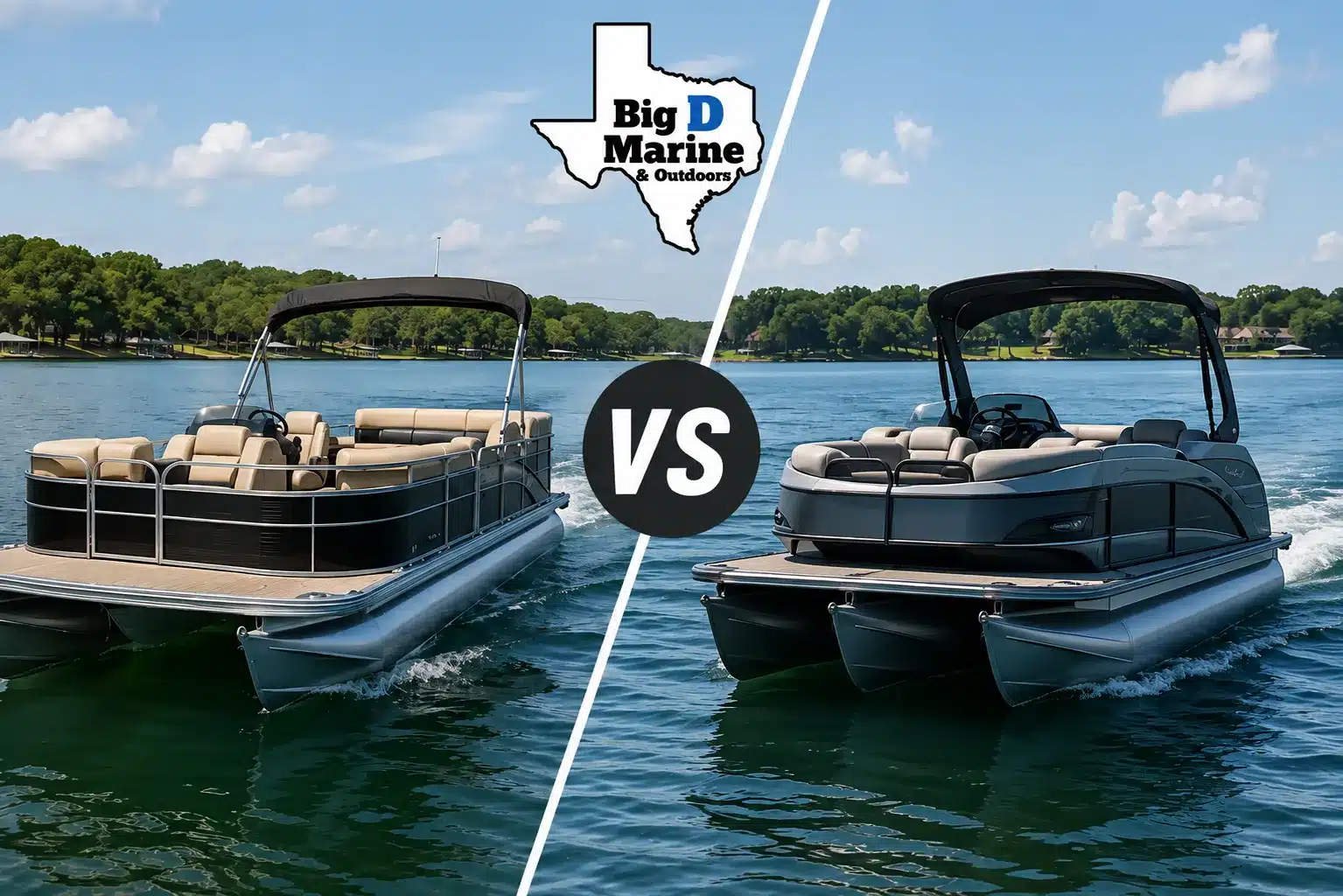
A pontoon has two aluminum tubes under the deck. A tritoon has three. That one design difference changes almost everything about how the boat rides, how fast it goes, how much horsepower it can carry, and how it holds up in Texas afternoon wind. For most Texas lake families the tritoon is the better long term choice, because it handles the wind chop on big lakes like Lake Conroe and Sam Rayburn, tows tubers and skiers comfortably, and holds resale value better. The twin tube pontoon still makes sense for calm morning cruisers and buyers on a tighter budget. Big D Marine and Powersports carries SunCatcher and Xcursion in both pontoon and tritoon configurations.
The One Design Difference That Changes Everything
Look under any pontoon and you will see aluminum tubes running the length of the deck. Those tubes are the flotation. A traditional pontoon uses two tubes, one on each side. A tritoon adds a third tube in the middle. That third tube is not just extra flotation. It changes how the boat sits in the water, how it responds to weight, how it responds to power, and how it handles waves and wind.
Once you understand that one difference, every other tradeoff between pontoon and tritoon follows from it. The tritoon sits higher, planes faster, handles more horsepower, and rides drier in chop. The pontoon is lighter, cheaper, and easier to trailer, but gives up performance and comfort in rough water.
If you have not decided which Texas lake you will actually spend most time on, our companion post Lake Conroe vs Lake Livingston: Best Boat for Each covers the lake decision. This guide picks up where that one ends, focused on the pontoon versus tritoon call itself.
Where a Twin Tube Pontoon Wins
The traditional twin tube pontoon still holds real advantages, and the industry sometimes forgets to talk about them because tritoons are the trend. Here is where a pontoon is genuinely the right choice.
- Lower entry price. A comparable pontoon runs five to eight thousand dollars less than a tritoon of the same length and trim, before the outboard difference.
- Lower operating cost. Smaller outboard means less fuel and less service cost per hour of use.
- Easier trailering. Lighter boat, narrower trailer footprint, more forgiving in tight ramps and driveways.
- Simpler storage. Fits more easily in standard covered slips and residential garages built for pontoons.
- Better for calm water. On sheltered lakes and calm morning cruising, a twin tube pontoon rides just as comfortably as a tritoon.
If most of your boating is early morning coffee cruises, sunset rides, and slow cove exploration on a smaller lake, a twin tube pontoon does everything you actually need and costs meaningfully less to buy and operate.
Where a Tritoon Wins
For Texas lake families who do more than calm morning cruising, the tritoon advantages are real and they add up fast.
- Ride quality in chop. The third tube keeps the deck out of the water in wind chop. On Lake Conroe and Sam Rayburn afternoons, this alone justifies the price difference for many buyers.
- Higher horsepower rating. Tritoons accept 250 or 300 horsepower Yamaha SHO outboards. Most twin tube pontoons cap at 150 to 200 horsepower.
- Better tubing and skiing. The third tube gives the lift needed to plane out with a tube behind, or to pull a slalom skier. A twin tube pontoon can pull light tubes but struggles with anything more.
- Higher top end. A tritoon with a 250 SHO can run in the low to mid forty miles per hour range. A twin tube pontoon with a 150 usually tops out in the low twenties or high teens.
- Better dry ride. Higher deck clearance keeps spray off passengers and gear.
- Stronger resale. Tritoons hold value better because the used market recognizes them as more capable boats.
Head to Head: The Categories That Matter
Cost
A tritoon typically costs five to eight thousand dollars more than a comparable pontoon of the same length. On top of that, tritoons usually carry a bigger outboard, which adds another three to seven thousand dollars. Total new boat premium for a tritoon is often eight to fifteen thousand dollars more. Current Yamaha outboard pricing is on our Yamaha outboard pricing page.
Ride Quality
Tritoon wins clearly. On any lake with real fetch and afternoon wind, a tritoon is more comfortable at the same passenger load. On a calm morning, the two feel about the same.
Speed and Watersports
Tritoon wins. A tritoon with a 200 to 250 horsepower Yamaha handles tubing and slalom skiing comfortably. A twin tube pontoon with a 115 to 150 tops out in the low twenties and struggles with real watersports.
Fuel Economy
Pontoon wins at cruising speed if you compare boats with similar outboards. But most tritoons run bigger outboards, so real world fuel use is often higher on the tritoon. If you cruise at 20 miles per hour on a calm morning, a pontoon and a smaller outboard is more efficient.
Passenger Capacity
Tied at similar lengths. Both a 22 foot pontoon and a 22 foot tritoon typically rate for 10 to 12 passengers, though the tritoon carries the load more comfortably and stays on plane with more passengers aboard.
Resale Value
Tritoon wins by a meaningful margin. In the Texas used market, tritoons hold value better and sell faster than comparable pontoons.
Ease of Ownership
Pontoon wins slightly. Smaller outboard, lighter trailer, and simpler service all add up to lower total cost of ownership over five to seven years.
Which One Fits Your Family
Pick a twin tube pontoon if any of these describe you:
- You mainly boat on smaller sheltered lakes.
- Your typical use is calm morning cruises and sunset rides.
- You do not plan to tow tubes, wakeboards, or skis.
- You want the lowest entry price and lowest operating cost.
- You will trailer regularly and want a lighter package.
Pick a tritoon if any of these describe you:
- You boat on Lake Conroe, Sam Rayburn, Livingston, or another lake with real wind fetch.
- You want to tube, ski, wakeboard, or run watersports.
- You entertain and typically have six to ten passengers on board.
- You care about resale value five to seven years out.
- You want the smoother ride in afternoon chop.
Sizing Guide
Whether you go pontoon or tritoon, sizing matters. Here is our guide for Texas lake use.
- 20 to 22 foot pontoon: two to four adults plus kids, calm cruising, 90 to 115 horsepower Yamaha.
- 22 to 24 foot pontoon: four to six adults plus kids, family cruising, 115 to 150 horsepower Yamaha.
- 22 to 24 foot tritoon: six to eight adults comfortably, tubing and skiing, 150 to 200 horsepower Yamaha.
- 24 to 26 foot tritoon: eight to ten adults, full entertainer, 200 to 300 horsepower Yamaha SHO.
- 26 foot and up premium tritoon: full luxury layout, 300 horsepower Yamaha SHO standard.
What We Sell and Why
Big D Marine and Powersports carries SunCatcher pontoons and tritoons and Xcursion pontoons and tritoons. Both brands are built by G3 Boats, which is a wholly owned subsidiary of Yamaha Motor Corporation. That parent company relationship matters more than it sounds. It means every pontoon and tritoon is engineered as a package with Yamaha outboards, so the whole rig works together from day one and holds up over the years.
Where to See Pontoons and Tritoons in Person
The best way to make this decision is to walk both on the same afternoon. We stock pontoons and tritoons side by side at our Huntsville flagship on State Highway 19 and our Hitchcock location on the Galveston Bay side. Our I 45 Huntsville location typically has pre owned pontoons and tritoons in inventory. See current stock on the boat inventory page or new stock on the new inventory page.
Financing, Trade In, and Service
Pontoons and tritoons finance well because they hold value. Pre qualify with a soft credit check on our boat financing page. If you have a boat to trade, get a fair value estimate from our trade in valuation tool before you visit. After the sale, our certified service department handles winterizing, annual service, and hull work at all three locations.
Frequently Asked Questions
What is the difference between a pontoon and a tritoon?
A pontoon has two aluminum tubes under the deck. A tritoon has three tubes. That single design difference changes almost everything: a tritoon rides higher, planes faster, handles rough water better, and accepts more horsepower. A twin tube pontoon is lighter, cheaper to buy, and easier to trailer, but gives up ride quality and top end speed.
Is a pontoon or a tritoon better for tubing and skiing?
A tritoon is significantly better for tubing and skiing. The third tube adds lift and lets the boat plane faster and hold a higher top end with a full load. A twin tube pontoon can tow a light tuber but struggles with slalom skiing, wakeboarding, or heavier loads.
How much more does a tritoon cost than a pontoon?
A tritoon typically costs five to eight thousand dollars more than a comparable pontoon of the same length and trim level, before accounting for the higher horsepower outboard most tritoons carry. Over a full new boat build, the total tritoon premium including the bigger outboard often runs eight to fifteen thousand dollars more than the pontoon equivalent.
Which is better for a big Texas lake like Lake Conroe or Sam Rayburn?
For big open Texas lakes with real fetch like Lake Conroe, Sam Rayburn, and Lake Livingston main lake, a tritoon is the better choice. The afternoon wind on these lakes builds enough chop to make a twin tube pontoon uncomfortable, and the tritoon handles it much better. For smaller, more sheltered lakes and calm morning use, a pontoon is fine.
Which pontoon or tritoon brand should I buy in Texas?
Big D Marine and Powersports carries SunCatcher and Xcursion pontoons and tritoons, both built by G3 Boats which is owned by Yamaha. SunCatcher leans premium with a broader lineup that scales to luxury. Xcursion leans practical with rear facing loungers and a family friendly layout. Both are strong picks for Texas lake use. Contact our team to check current pontoon and tritoon inventory.
Ready to Decide
Come by any of our three Texas locations and walk both a pontoon and a tritoon on the same visit. Bring your questions about lake, family, and how you actually plan to use the boat. Browse current stock on the inventory page or start at the Big D Marine homepage.