Quick Answer
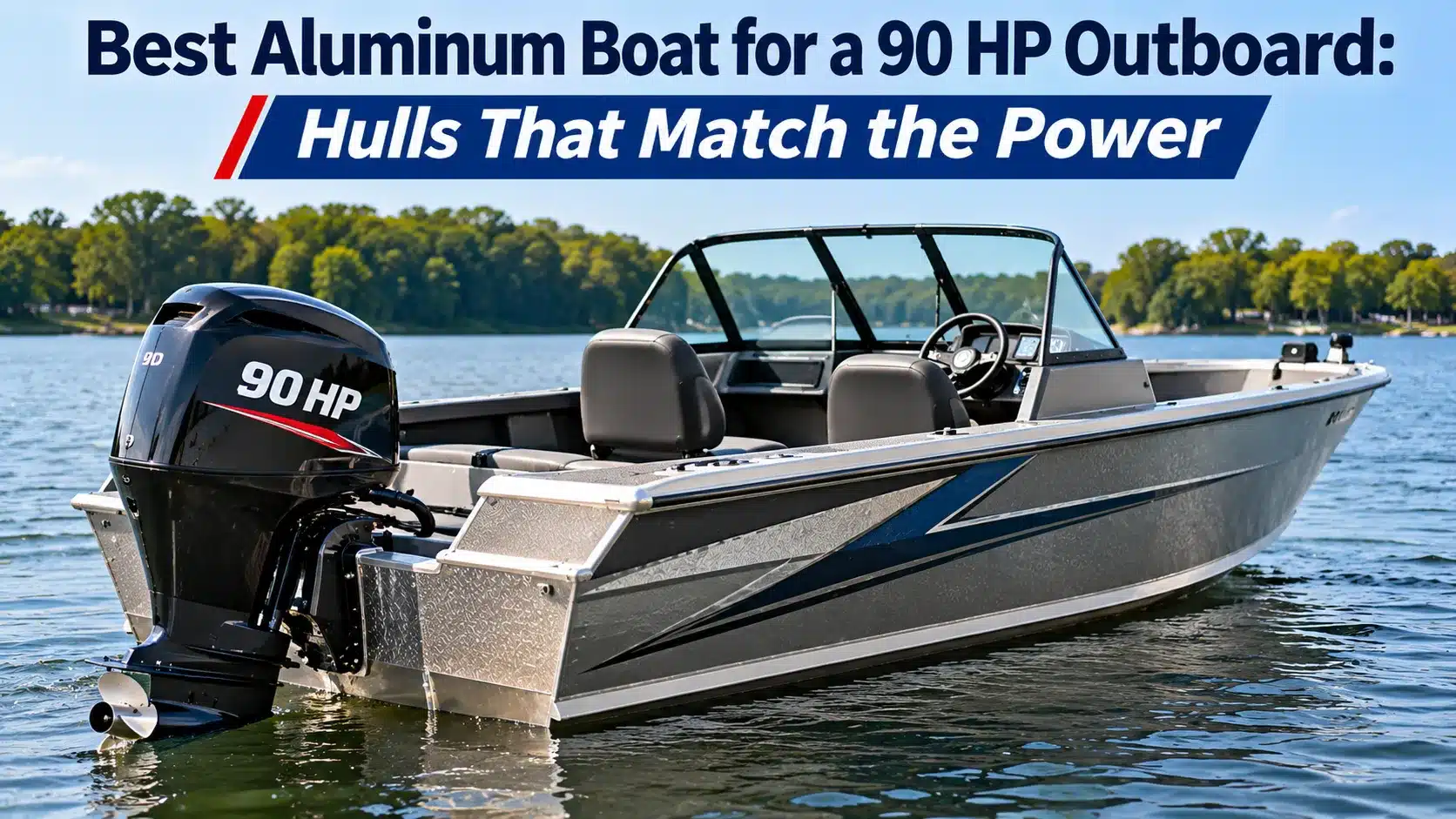
A 90 horsepower outboard is a popular match for 16 to 19 foot aluminum fishing boats because it balances cost, weight, and fuel economy. For lakes with chop, deep V hulls such as the G3 Angler V Series handle a 90 well. For calm water, a modified V hull like the G3 Sportsman is efficient and affordable. For shallow marsh and duck hunting, heavy gauge hulls such as the Excel Shallow Water series, G3 Gator Tough, and Jireh shallow water skiffs pair well with 60 to 90 horsepower. Always check the capacity plate on the exact hull before choosing a motor, because maximum horsepower varies by model.
Why 90 Horsepower Is Such a Popular Size
Ask a Texas aluminum boat owner what they run, and 90 horsepower comes up constantly. It sits in the sweet spot between smaller motors that struggle with a loaded hull and larger motors that add cost and weight without much benefit on a 16 to 19 foot boat.
A Yamaha F90 is a common choice because the power is enough to plane a loaded boat quickly, the weight is manageable on an aluminum transom, and four stroke efficiency keeps fuel costs reasonable on long days at the lake. You can see current pricing on our Yamaha outboard price page, and our Yamaha outboard buying guide explains how to choose between sizes.
Check the Capacity Plate First
Before you match any motor to any boat, read the capacity plate on the hull. This plate lists the maximum horsepower, the maximum number of people, and the maximum weight the boat is rated to carry. It is a safety rating, and it also affects insurance and warranty.
- Never exceed the maximum horsepower rating, even if the transom seems strong enough.
- A rating of 90 or higher on the plate means a 90 is allowed, not that it is the best fit.
- Hulls rated for less than 90 need a smaller motor, regardless of what a friend runs on a similar boat.
- Shaft length must match the transom height. Most aluminum fishing boats use a long shaft, but confirm before you buy.
What to Expect From a 90 on an Aluminum Boat
Performance depends on the hull, the load, the propeller, and the water. As a rough guide, a lightly loaded 16 to 17 foot aluminum boat with a 90 can run in the upper 30s to mid 40s in miles per hour, while heavier or larger hulls will be slower. Treat these numbers as ballpark figures and ask for a water test or a spec sheet on the exact boat.
- Lighter hulls and flatter bottoms plane sooner and run faster on a given motor.
- Deep V hulls need more power to plane but ride smoother in chop.
- Extra gear, passengers, and a trolling motor all add weight and reduce speed.
- The right propeller can change speed and hole shot noticeably, so ask us to tune it.
Best Hull Types for a 90 by How You Fish
Lakes with chop: deep V hulls
The G3 Angler V Series is a deep V aluminum fishing boat built for bigger lakes and changing conditions, offered from about 16 to 21 feet. Many 17 to 19 foot Angler V models pair well with a Yamaha in the 90 to 115 range, and our G3 bass boat guide covers the series in detail. For a broader comparison, see our deep V boat guide.
Calm water and smaller lakes: modified V hulls
The G3 Sportsman Series uses a modified V design that suits calmer freshwater fishing, and it runs efficiently on moderate power. It is a strong value pick when chop is not a regular problem.
Shallow marsh and hunting: heavy gauge flat bottom hulls
Hulls such as the Excel Shallow Water series, the G3 Gator Tough series, and Jireh shallow water skiffs are built for skinny water. Many of these hulls run well on 60 to 90 horsepower, depending on size and load. Read our G3 jon boat guide, our Jireh guide, and our mud motor boat guide for details.
Coastal bays: aluminum bay boats
Aluminum bay boats such as the Excel Bay Pro Elite family handle oyster and shallow bay water, and powering depends on length. Larger bay hulls typically want more than 90, so see our best selling bay boat guide.
90 vs 60 vs 115: How to Decide
- Choose a 60 when the hull is small and light, you fish mostly alone, and you value low cost and fuel savings.
- Choose a 90 when you carry a partner, gear, and a trolling motor, and want a balance of speed, price, and efficiency.
- Choose a 115 when the hull is rated for it, you run a deep V on big water, or you often carry a full load.
Remember that more power adds purchase cost, weight on the transom, and fuel burn. Bigger is not always better, and the hull rating is the ceiling. Our boat cost guide shows how motor choice affects total price.
Weight, Trailer, and Fuel Considerations
A 90 horsepower four stroke adds noticeable weight to the stern. That affects how the boat floats, how it trims, and what your trailer and tow vehicle must handle. Ask for the combined weight of the boat, motor, and trailer, and compare it to your tow vehicle’s rated capacity.
Fuel economy is usually good on a properly matched hull, but running at full throttle all day will burn more fuel than cruising. A correctly propped motor at a moderate cruise is both efficient and easy on the engine.
Aluminum Hull Construction Still Matters
Power only works as well as the hull beneath it. Heavy gauge, well welded aluminum handles the stress of a strong motor and the abuse of stumps and ramps. Our aluminum hull gauge guide explains what to look for, and our G3 vs Crestliner vs Lowe guide compares brands.
Where to See Aluminum Boats Rigged With a 90
Big D Marine and Powersports rigs aluminum boats with Yamaha and Suzuki outboards at three Texas locations. Visit our Huntsville flagship, our I 45 Huntsville location, or our Hitchcock location, and browse the G3 and Excel brand pages first. You can also see current boats on our inventory page.
Financing and Service
Pre qualify on our financing page. If you already own a boat that needs a new motor, our repower cost guide explains the process. Our certified service department handles installation, propping, and maintenance.
Frequently Asked Questions
What aluminum boat is best for a 90 hp outboard?
It depends on the water. Deep V hulls such as the G3 Angler V Series suit lakes with chop, modified V hulls such as the G3 Sportsman suit calmer water, and heavy gauge hulls such as the Excel Shallow Water series suit marsh and hunting. Always check the capacity plate.
How fast will a 90 hp outboard push an aluminum boat?
A lightly loaded 16 to 17 foot aluminum boat can run in the upper 30s to mid 40s in miles per hour, while heavier or larger hulls are slower. Results vary with hull, load, propeller, and water conditions.
Is 90 hp enough for a 17 foot aluminum boat?
Yes, for most 17 foot aluminum fishing boats a 90 is a strong match, provided the capacity plate allows it. A 90 balances speed, cost, and fuel economy for one or two anglers with gear.
Can I put a bigger motor than the rating on my aluminum boat?
No. The capacity plate lists the maximum horsepower, and exceeding it is unsafe and can affect insurance and warranty coverage. If you want more power, choose a hull rated for it.
Where can I buy an aluminum boat with a 90 hp Yamaha in Texas?
Big D Marine and Powersports rigs G3 and Excel aluminum boats with Yamaha outboards at locations in Huntsville, I 45 Huntsville, and Hitchcock. Contact us for a quote.
Ready to Match a Hull to Your Power
Come by any of our three Texas locations to compare aluminum hulls rigged with Yamaha power. Browse stock on our inventory page or start at the Big D Marine homepage.